
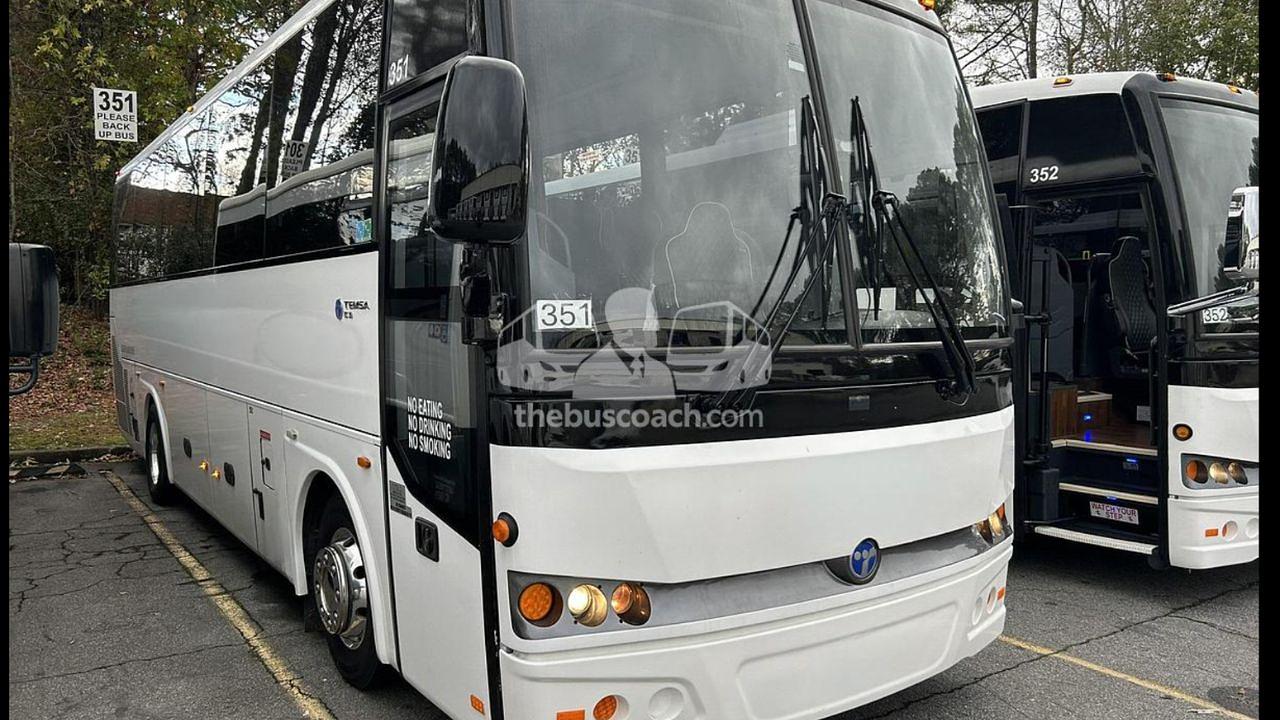
The TEMSA TS30 is a niche product. That’s not a criticism. It’s the most important thing to understand about it before you commit a dollar of capital to one.
Most charter operators run standard 55 to 56-passenger full-size coaches and for very good reasons. Those buses handle 99% of the jobs that come through the phone. They hold resale value better. They give smaller operators the flexibility to help out other companies when they’re sold out. If you’re building a fleet from scratch or running fewer than a dozen coaches, a standard 56-passenger coach is almost always the right backbone decision.
But there are specific situations where the TS30 changes the economics in a meaningful way. Airport shuttle contracts. Campus circulators. Corporate accounts that consistently need 25 to 34 passengers and don’t want the cost of a full-size coach. If you’re in one of those situations, or if you’re an established operator who can add a niche vehicle without betting the whole fleet on it, the TS30 is worth understanding properly. The Bus Coach carries TEMSA inventory and we’ve put this guide together for operators who are running real numbers, not reading brochures.
What the TEMSA TS30 Actually Is: A Brief History Worth Knowing
The TEMSA TS30 made its North American debut at the 2012 UMA EXPO in Nashville as a US-exclusive product. That last part matters. TEMSA designed the TS30 specifically for North American operators rather than adapting an existing European model for the market. The original TS30 was derived from TEMSA’s MD 9 mini coach, which was popular in Europe, but the North American version used American powertrain components from the start including domestic mirrors, lighting systems, and Cummins/Allison drivetrains.
Distribution in the US went through CH Bus Sales, who brought the model into the national market. The TS30 quickly gained traction among transportation providers who needed compact capacity without sacrificing the comfort passengers associate with a proper motorcoach. After the 2019 redesign, the TS30 got a substantially upgraded exterior and interior, adding 35% more luggage space, wider seats, and a stainless steel body structure. The current version is a considerably more capable vehicle than the 2012 original.
TEMSA itself has been manufacturing buses since 1968 and operates in over 70 countries. For North American operators unfamiliar with the brand, the relevant context is that the TS30 isn’t a startup product or a recent experiment. It’s a mature vehicle platform with genuine after-sales support, parts availability, and a growing base of US operators who have logged real miles on these coaches.
The Fleet Math: When a 30-Foot Coach Outperforms a 45-Footer
Here’s the specific scenario where the TS30 changes the economics. You have a contract for airport shuttle work, a campus circulator, or a corporate route where the passenger count is predictable at 25 to 34 people. The route has physical constraints that make a 45-foot coach impractical. Maybe the turnaround at the hotel drop zone is too tight. Maybe the parking facility has a length restriction. Maybe the venue literally won’t let a full-size coach through the entrance.
In those situations, sending a 56-passenger coach is wasteful. You’re burning extra fuel, paying a driver to operate a half-empty vehicle, and still dealing with all the operational friction of a large coach in a tight space. A 30-foot coach that seats 34 passengers at a lower acquisition cost and better fuel efficiency changes the per-trip economics meaningfully. The savings aren't dramatic on any single trip. Over a full year of dedicated contract runs, it compounds.
The TS30 has a 27-foot 5-inch turning radius. A full-size coach turns in 45 to 55 feet. That’s the difference between fitting a hotel loop on the first attempt and blocking traffic while you execute a three-point turn. On contract routes with regular venue access challenges, that maneuverability advantage isn’t a marketing specification. It’s the reason the route is operationally viable.
For smaller operators or anyone building their initial fleet: the TS30 is not a substitute for a standard coach in a general charter operation. A 34-passenger capacity means it can’t take the majority of group charters that come through the phone, and the smaller resale market means you’ll work harder to exit the asset when the time comes. Established operators can absorb this. New operators should fill their fleet with 56-passenger coaches first and add niche vehicles when a specific contract justifies them.
TEMSA TS30 vs TS45: Which Coach Belongs in Your Fleet?
For operators already in the TEMSA ecosystem, or considering a TEMSA purchase, the first comparison to make is within the product family. The TS30 and TS45 serve very different roles and the decision between them comes down to three factors: your typical group size, the venues you serve, and your fleet mix strategy.
Factor: Length TEMSA TS30: 30 feet TEMSA TS45: 45 feet
Factor: Seating TEMSA TS30: Up to 34 + 1 driver, with restroom TEMSA TS45: Up to 57 passengers
Factor: Turning radius TEMSA TS30: 27 ft 5 in TEMSA TS45: ~50 feet
Factor: Best passenger count TEMSA TS30: 25 to 34 TEMSA TS45: 40 to 57
Factor: Urban manoeuvring TEMSA TS30: Excellent, fits tight venues TEMSA TS45: Challenging in tight access
Factor: Fuel economy TEMSA TS30: Better MPG, lighter vehicle TEMSA TS45: Higher fuel burn
Factor: Acquisition cost TEMSA TS30: Lower (new and used) TEMSA TS45: Higher, ~£500k+ new
Factor: Resale market TEMSA TS30: Smaller, niche demand TEMSA TS45: Larger, more liquid
Factor: Best use case TEMSA TS30: Airport shuttle, campus, urban tour TEMSA TS45: Full charter, tour, large groups
The TS45 is TEMSA’s full-size offering and it fills the standard charter coach role with up to 57 passengers and the range and comfort that general group charter requires. If your work is mixed, varied, and involves groups that can range from 20 to 55 passengers across different jobs, the TS45 gives you more utility per vehicle.
The TS30 makes sense alongside a TS45 fleet, not instead of one. An established operator with several TS45 coaches for their standard work and a TS30 for dedicated smaller-volume contract routes gets the best of both platforms. The TS30 keeps the TS45 units available for full-capacity charter jobs while running the smaller contract routes efficiently.
Where the TS30 wins on its own is in fleets built around specific contract types where group sizes are consistently below 34 passengers. Airport ground transport, corporate account fleets, and campus transit operations often fit this profile. In those cases, a fleet of TS30 units may make more operational sense than a mixed fleet with full-size coaches that run underloaded on every trip.
TEMSA TS30 vs Full-Size Coach: The Honest Side by Side
The comparison most fleet operators want is the one manufacturers don’t put on the spec sheet. Here’s the version that includes the trade-offs alongside the advantages.
Factor: Length
TEMSA TS30: 30 feet
Standard 56-Passenger Coach: 40 to 45 feet
Factor: Seating
TEMSA TS30: Up to 34 + 1 with restroom
Standard 56-Passenger Coach: 55 to 56 passengers
Factor: Turning radius
TEMSA TS30: 27 ft 5 in
Standard 56-Passenger Coach: 45 to 55 feet
Factor: Fuel economy
TEMSA TS30: Better MPG per trip
Standard 56-Passenger Coach: Higher fuel burn
Factor: Acquisition cost
TEMSA TS30: Lower
Standard 56-Passenger Coach: ~$500k+ new
Factor: Resale market
TEMSA TS30: Smaller, niche demand
Standard 56-Passenger Coach: Larger, easier to move
Factor: Fleet flexibility
TEMSA TS30: Limited to smaller group jobs
Standard 56-Passenger Coach: Fits 99% of charter requests
Factor: Best for
TEMSA TS30: Dedicated contract, urban, campus
Standard 56-Passenger Coach: Mixed charter, line-run, general use
The resale row deserves more attention than it usually gets. A TEMSA TS30 for sale reaches a smaller audience than a standard 56-passenger coach. Fewer operators need a 30-foot midi coach, which means it takes longer to move and often at steeper depreciation. That’s not a dealbreaker when the contract economics justify the purchase, but it’s a real factor when you’re thinking about your exit from the asset 8 to 10 years down the road. Buying used at the right price is one way to reduce this exposure.
Who Actually Needs a TS30: Use Cases Where the Economics Hold Up
The most useful question about any niche vehicle isn’t ‘is it a good bus?’ It’s ‘is it a good bus for my specific routes?’ The TS30 earns its place in a fleet very clearly in specific situations.
Operator Type: Airport shuttle
Why TS30 Works: Fits tight hotel drop zones, right size for 25–34 pax runs
Key Advantage: Fuel savings over full-size daily
Operator Type: Corporate shuttle
Why TS30 Works: Premium interior matches corporate expectations at right capacity
Key Advantage: Can charge premium rate
Operator Type: Campus / university
Why TS30 Works: Navigates campus roundabouts and service roads
Key Advantage: Turning radius fits where full-size can't
Operator Type: Urban tour
Why TS30 Works: Accesses hotel loops, restaurant drop-offs, residential areas
Key Advantage: Goes where 45-foot coach cannot
Operator Type: Commuter / line-run
Why TS30 Works: Cost-effective where ridership averages below 34 pax
Key Advantage: Lower operating cost per trip
Operator Type: Contract feeder
Why TS30 Works: Pairs with full-size coach fleet for smaller legs
Key Advantage: Keeps full-size free for larger jobs
Airport ground transport operators are probably the strongest fit. Fixed routes, predictable passenger counts, tight drop zones, and contracts that justify a dedicated vehicle make the TS30 economics work cleanly. The fuel savings versus a full-size coach on a 50-mile airport circuit, run every day, compound quickly over a full operating season.
The operators who should think carefully before buying are general charter companies running mixed work. A call for 40 passengers strands your TS30 at the depot. A standard coach would have taken that job and earned the revenue. If your fleet is small and your work is varied, the inflexibility of a 34-passenger limit is a real operating cost that doesn’t show up on the spec sheet.
TEMSA TS30 Specs: What the Numbers Mean for Daily Operations
The spec sheet tells you the numbers. This section tells you what those numbers mean for the decisions you make every day running a fleet.
Spec: Length
Detail: 30 feet
What It Means Operationally: Hotel loops, campus routes, tight venues
Spec: Turning radius
Detail: 27 ft 5 in
What It Means Operationally: Fits where 45-footers can't turn
Spec: Seating
Detail: Up to 34 + 1 with restroom
What It Means Operationally: Full comfort; restroom standard
Spec: Engine
Detail: Cummins B 6.7L Diesel, 250 hp, 660 lb-ft at 1,600 rpm
What It Means Operationally: Parts widely available, familiar to shops
Spec: Transmission
Detail: Allison B300 or Eaton Procision 7-speed DCT
What It Means Operationally: Proven options, fuel economy choice
Spec: Fuel tank
Detail: 80 US gallons
What It Means Operationally: Fewer stops on long contract days
Spec: Luggage
Detail: 190 cubic feet (35% more than earlier models)
What It Means Operationally: Handles multi-day group baggage
Spec: Structure
Detail: Monocoque integral, 10+ year design life
What It Means Operationally: Durable, complex collision repair
Spec: Safety
Detail: Bendix ESP, ESC, ABS, ATC + 3-point seatbelts
What It Means Operationally: DOT compliant, insurance-friendly
Spec: Amenities
Detail: Dual USB-A/C per seat, LED ambient, digital cluster
What It Means Operationally: Justifies premium rate vs shuttle alternatives
The Cummins B 6.7L diesel engine family is one of the most widely serviced commercial diesel platforms in North America. That matters the moment something goes wrong. Your regular commercial vehicle shop either already knows this engine or can learn it without specialist training. Parts are not exotic or long lead-time items. This is a practical advantage that doesn’t appear in the marketing material but shows up in uptime data over a multi-year fleet cycle.
The 80-gallon fuel tank is worth noting on a 30-foot coach. It’s a larger capacity than the vehicle size might suggest, which means fewer fuelling stops on long contract days. An airport circulator running from 5am to midnight gets more efficient driver utilisation when the fuel stop is at the end of the shift rather than in the middle of it.
Safety Systems: What Fleet Managers and DOT Compliance Require
Fleet operators managing DOT compliance and insurance costs look at safety systems as both a regulatory obligation and a cost management tool. The TS30’s safety package is genuinely comprehensive for a vehicle of its class and it’s worth knowing what each system does in plain language rather than just as a box ticked on a spec sheet.
System: Bendix ESP
Full Name: Electronic Stability Program
What It Does: Reduces rollover and skid risk
Why Fleet Managers Care: Insurance underwriters recognize Bendix systems
System: ESC
Full Name: Electronic Stability Control
What It Does: Keeps vehicle on intended path
Why Fleet Managers Care: Reduces liability in adverse conditions
System: ABS
Full Name: Anti-Lock Braking System
What It Does: Prevents wheel lockup under braking
Why Fleet Managers Care: DOT inspection standard
System: ATC
Full Name: Automatic Traction Control
What It Does: Prevents wheel spin on acceleration
Why Fleet Managers Care: Reduces tire wear and incident risk
System: 3-point seatbelts
Full Name: Lap and shoulder belt system
What It Does: Restrains every passenger
Why Fleet Managers Care: Regulatory requirement for motorcoach safety
The Bendix Electronic Stability Program is one of the most recognised safety systems in North American commercial vehicle operations. Insurance underwriters are familiar with it and in some cases factor its presence into premium calculations. For fleet managers who manage multiple vehicles and multiple insurance renewals, having documented Bendix ESP across the fleet is a detail worth surfacing in those conversations.
The 3-point seatbelt standard at every passenger position is a compliance item that matters on school and corporate charter work, where clients increasingly specify seatbelt-equipped coaches in their RFPs. The TS30 comes equipped as standard rather than requiring this as an aftermarket addition.
Passenger Experience: Why the TS30 Commands a Premium Over Shuttle Alternatives
Fleet operators choosing between a TS30 and a large cutaway shuttle for the same route often focus on the operational cost comparison. The passenger experience comparison is equally important because it determines what price you can charge.
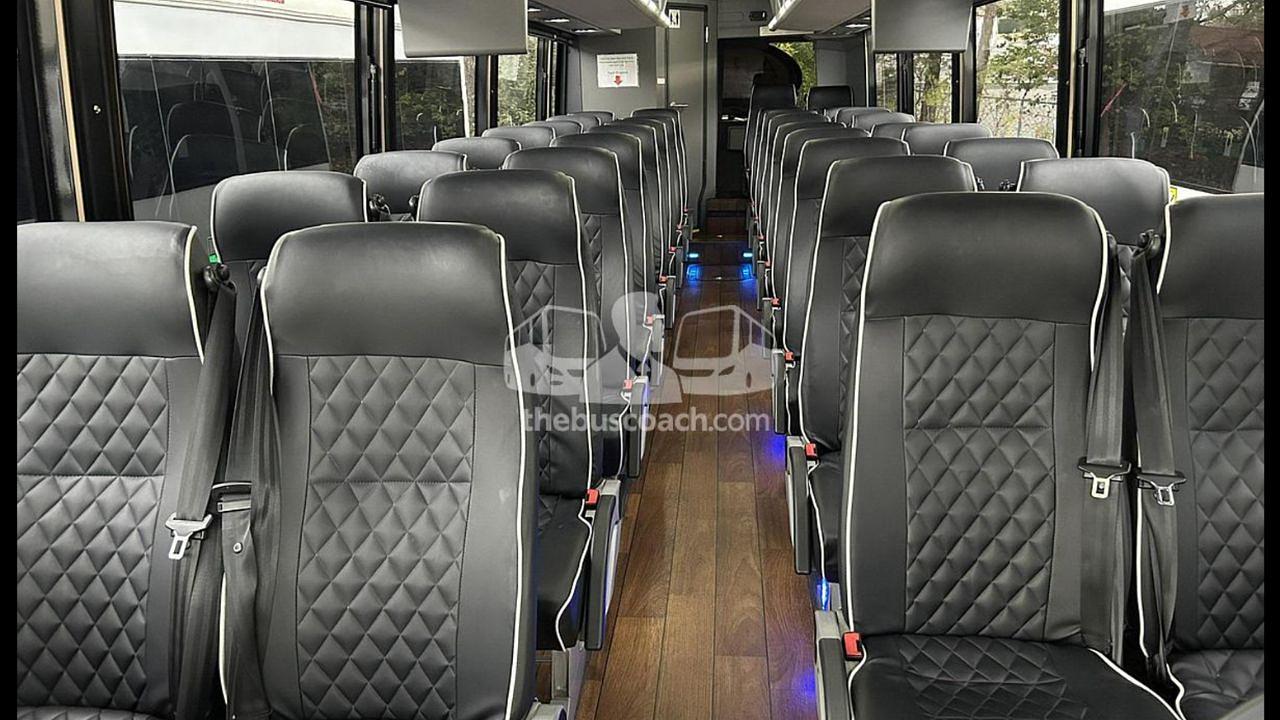
A cutaway shuttle seats passengers in van-style seating, usually on forward-facing bench rows with modest headroom and basic climate control. A TS30 seats passengers in high-back reclining motorcoach seats with adjustable headrests, armrests, and footrests, dual USB-A and USB-C charging ports at every seat, proper overhead storage racks, ventilated roof hatches, and ambient LED lighting throughout the cabin. The restroom is included as standard.
For corporate airport shuttle accounts, this distinction is the justification for a materially higher per-seat rate. Corporate travel managers booking ground transport for business travellers are comparing the TS30 experience to a hotel van or a large van shuttle. The TS30 wins that comparison clearly. Operators who present this comparison correctly in their client proposals can command pricing that makes the TS30’s economics work even on shorter routes.
High-back reclining seats: adjustable headrests, armrests, footrests at every position
• Dual USB-A/C charging: at every seat, which corporate clients increasingly expect
• Restroom included: standard, not optional, relevant for longer contract runs
• Ambient LED lighting: positions the TS30 as premium over shuttle alternatives on presentation
• Digital cluster with rearview display: driver experience that supports safer, more professional operation
Total Cost of Ownership: The Full Financial Picture
No manufacturer publishes a total cost of ownership comparison for the TS30 versus a full-size coach. That’s not surprising. The honest TCO story is more nuanced than marketing copy handles well. Here’s the framework fleet finance managers actually need to evaluate the purchase.
Cost Category: Acquisition (used)
TEMSA TS30 (5-year estimate): $150k to $250k
Standard 45-ft Coach (5-year estimate): $250k to $400k
Notes: TS30 lower entry cost
Cost Category: Fuel (70k mi/yr avg)
TEMSA TS30 (5-year estimate): Lower per-mile burn
Standard 45-ft Coach (5-year estimate): Higher per-mile burn
Notes: ~10–15% fuel saving estimate
Cost Category: Routine maintenance
TEMSA TS30 (5-year estimate): Lower (lighter vehicle)
Standard 45-ft Coach (5-year estimate): Moderate to high
Notes: Tool-free access reduces shop time
Cost Category: Collision repair
TEMSA TS30 (5-year estimate): Moderate (monocoque complexity)
Standard 45-ft Coach (5-year estimate): Moderate
Notes: Monocoque costs more post-collision
Cost Category: Resale (year 5–8)
TEMSA TS30 (5-year estimate): Smaller buyer pool, slower move
Standard 45-ft Coach (5-year estimate): Larger pool, more liquid
Notes: Build exit strategy at purchase
Cost Category: Insurance
TEMSA TS30 (5-year estimate): Generally lower (smaller vehicle)
Standard 45-ft Coach (5-year estimate): Generally higher
Notes: Verify with your carrier
Cost Category: Operator net (typical)
TEMSA TS30 (5-year estimate): Strong on dedicated contracts
Standard 45-ft Coach (5-year estimate): Strong on mixed charter work
Notes: TCO only favours TS30 on right contract
The acquisition cost gap between a used TS30 and a comparable-age full-size coach is real and meaningful. A pre-owned TS30 from the 2015 to 2019 vintage typically comes in at significantly lower acquisition cost than a full-size coach of similar age and condition. That lower entry cost improves the cash flow position from day one and reduces the financing burden.
Fuel savings are the second most significant variable. The TS30 is lighter than a full-size coach and on routes where passenger loads are consistently in the 25 to 34 range, operating a 30-foot vehicle rather than a 45-foot one produces real fuel economy improvement per trip. The exact saving depends on route profile, but 10 to 15% is a reasonable estimate for urban and airport shuttle operations where the TS30 is running against its design purpose.
The resale adjustment is where operators sometimes get surprised. Budget conservatively on the exit value, particularly if the used TS30 market is thin at the time you’re trying to sell. Building a lower residual assumption into your acquisition model is the disciplined approach.
For operators who want to run specific numbers against an actual vehicle, The Bus Coach’s TEMSA listings include pricing on pre-owned TS30 units that you can use as the acquisition input in your own TCO model.
Serviceability: The Day-to-Day Advantage Fleet Managers Actually Notice
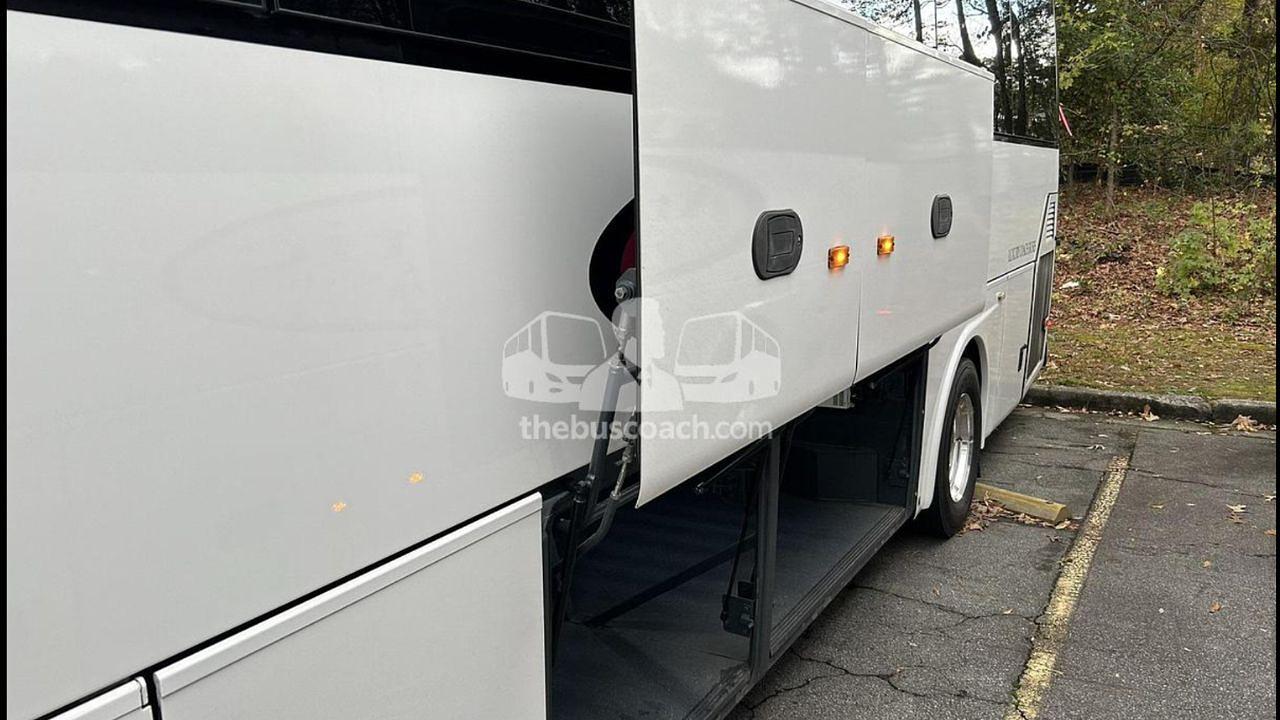
Operators who have run TEMSA coaches consistently mention the tool-free access design as something they didn’t fully appreciate until they compared it against their previous fleet maintenance experience. Daily pre-trip inspection items are grouped together in the engine room rather than scattered across the vehicle. The three-piece front and rear bumpers, swing-out rear fenders, and quick-release headlight system mean collision damage doesn’t cascade into a complex panel replacement job.
For smaller operations without a large in-house maintenance department, this design philosophy has a direct operating cost implication. Every hour that a technician spends hunting for access points or dismantling adjacent panels to reach a component is time the vehicle isn’t running and revenue that isn’t being earned. Faster component access means faster turnaround on maintenance events and lower total labour cost over the vehicle’s life.
The monocoque integral body structure is worth understanding before you buy. Monocoque construction distributes structural load across the entire body shell rather than a separate frame chassis. This produces better ride quality and long-term structural durability, which is where the 10+ year design life claim comes from. The trade-off is that post-collision body repair is more complex and more expensive than on a body-on-frame vehicle. Budget for that complexity if your vehicles operate in high-risk environments for minor collision events.
Allison B300 vs Eaton Procision: Choosing the Right Drivetrain
The TEMSA TS30 offers two transmission options and the choice affects both day-to-day operations and long-term service costs.
The Allison B300 automatic is the conservative, proven choice. Allison transmissions are standard across North American transit, commercial, and motorcoach applications. Almost every commercial vehicle shop in the US and Canada has Allison service experience and parts supply is excellent across the country, including smaller regional markets. If your routes are varied, your depot is outside a major metro area, or your mechanics don’t have specialist dual-clutch experience, the Allison is the lower-risk option.
The Eaton Procision 7-speed dual-clutch automated transmission is the newer, fuel-focused option. Dual-clutch designs hold the engine RPM in a more efficient operating range more consistently than conventional automatics, which produces measurable fuel economy improvement on high-mileage dedicated routes. On an airport circulator running 200 miles a day, the fuel saving compounds significantly over a year. The trade-off is smaller service footprint compared to Allison, which matters more the further you operate from dealer service centres.
• Choose Allison B300 if: mixed routes, regional operation, or limited specialist service access
• Choose Eaton Precision if: dedicated high-mileage routes, urban operation, and service infrastructure to support it
Buying a TEMSA TS30: New, Pre-Owned, and What to Inspect
The used TS30 market is smaller than the full-size coach market, which means finding the right unit takes more patience. But it also means that when you find a well-maintained unit at the right price, the acquisition economics can be excellent.
A new TS30 gives you the current exterior design, the choice of Allison or Eaton Procision, and full warranty coverage. It also starts you at the top of the depreciation curve. For operators with a specific long-term contract in hand and the financing to support a new vehicle purchase, new is the clean option.
Pre-owned TS30 units, particularly from the 2015 to 2019 generation, offer a lower acquisition cost with a known maintenance track record. The community of US operators running these coaches has developed a clear picture of where they wear and what to inspect. The Bus Coach’s TEMSA listings include condition information and service histories on pre-owned units, which is worth considerably more than a spec sheet when you’re making a capital decision.
Pre-Purchase Inspection Checklist
• Body structure: inspect wheel arches, rear corners, and undercarriage for previous impact damage or corrosion
• HVAC: run the system through all zones fully; the high-capacity unit is a TS30 strength but requires maintenance to stay that way
• Transmission: shift through all gears, test in stop-start urban simulation if possible
• Fuel system: check for contamination, especially on higher-mileage units
• Electrical: test all USB charging ports, ambient lighting, digital cluster, and rearview display
• Service records: documented maintenance history is a meaningful premium; pay for it
• Restroom system: test the lavatory system fully; service history on the holding tank is relevant for multi-day trip suitability
Financing a TS30: What the Numbers Look Like
The lower acquisition cost of the TS30 relative to a full-size coach makes the financing picture more manageable, but lenders sometimes apply more conservative loan-to-value ratios on midi coaches because the resale market is smaller. Come to a financing conversation with your contract economics clearly documented.
A lender who understands the bus industry will want to see that the vehicle has a purpose and that the purpose covers the payment with margin. An airport shuttle contract, a corporate transport agreement, or a campus transit contract that produces predictable monthly revenue is a much stronger application than a general ‘we’ll find work for it’ approach.
The Bus Coach works with financing partners who understand fleet vehicles and the seasonal revenue patterns of coach operators. If you’re looking at a TS30 purchase and want to understand financing options alongside the vehicle options, start that conversation before you finalize the vehicle choice rather than after.
The TEMSA TS30 is a well-engineered vehicle that solves a specific operational problem very well. It is not a general-purpose fleet solution and it shouldn’t be presented as one. The operators who do best with it are the ones who have a clear contract or route in hand that calls for a 30-foot midi coach, who understand the resale trade-off, and who have realistic expectations about where it sits in the broader fleet.
If that description matches your situation, The Bus Coach’s TEMSA listings are a practical starting point. The team can walk you through specific inventory, financing options that understand fleet vehicle economics, and an honest picture of what the TS30 will and won’t do for your operation.
Here’s the question worth answering before you sign anything: do you have a contract in hand that this bus will run, or are you buying a capability and hoping the work follows? Because the answer to that question is where the fleet math either holds together or falls apart.
FAQs
When was the TEMSA TS30 introduced to the US market?
The TS30 made its US debut at the 2012 UMA EXPO as a US-exclusive model. It was designed for North American operators with US powertrain components from the start. The 2019 redesign significantly updated the exterior and interior, adding 35% more luggage space and a stainless steel body structure.
How many passengers does the TEMSA TS30 seat?
Up to 34 passengers plus the driver, with a restroom included as standard. Some operators configure with fewer seats for additional legroom and market the premium space as an upgrade offering. The capacity is significantly below a standard 56-passenger full-size coach, which is the primary trade-off in fleet decisions.
Is the TEMSA TS30 a good fit for a small charter fleet?
It depends entirely on your contract mix. If your work is general charter with variable group sizes, a standard 56-passenger coach is more flexible and holds resale value better. The TS30 makes sense when you have dedicated routes or contracts with consistent groups in the 25 to 34 range. Smaller operators building their first fleet should prioritise standard capacity coaches first.
What is the difference between the TS30 and TS45?
The TS30 is 30 feet long and seats up to 34 passengers. The TS45 is 45 feet long and seats up to 57 passengers. The TS30 offers better maneuverability (27 ft 5 in turning radius), lower acquisition cost, and better fuel economy on smaller-group routes. The TS45 handles full charter and tour group work. Many operators run both models, using the TS30 for smaller dedicated contracts and the TS45 for general charter.
Where can I find a TEMSA TS30 for sale?
The Bus Coach’s TEMSA listings include new and pre-owned TS30 inventory with condition documentation. Pre-owned units from 2015 onwards are available at significantly lower acquisition cost than new. Contact the team for current inventory and financing options.
What are the safety systems on the TEMSA TS30?
The TS30 comes equipped with Bendix Electronic Stability Program (ESP), Electronic Stability Control (ESC), Anti-Lock Braking System (ABS), Automatic Traction Control (ATC), cruise control, low voltage warning systems, and 3-point seatbelts at every passenger position. The Bendix ESP system is recognised by major insurance underwriters and is DOT-compliant.
What is the total cost of ownership for a TEMSA TS30?
TCO depends on route type, annual mileage, and financing terms. The TS30 typically comes in at lower acquisition cost than a full-size coach, offers 10 to 15% fuel saving on routes where it’s running appropriately loaded, and benefits from lower insurance cost due to smaller vehicle class. The main TCO risk is resale value, which is lower than a standard coach due to smaller buyer pool. Budget conservatively on exit value and the economics work well on dedicated contract operations.
Which powertrain should I choose: Allison or Eaton Procision?
The Allison B300 automatic is the safer choice for mixed operations, regional fleets, or locations away from major service centres. The Eaton Procision 7-speed dual-clutch automated offers better fuel economy on dedicated high-mileage routes but has a smaller service network. Choose based on where you operate and what your service infrastructure can support.