
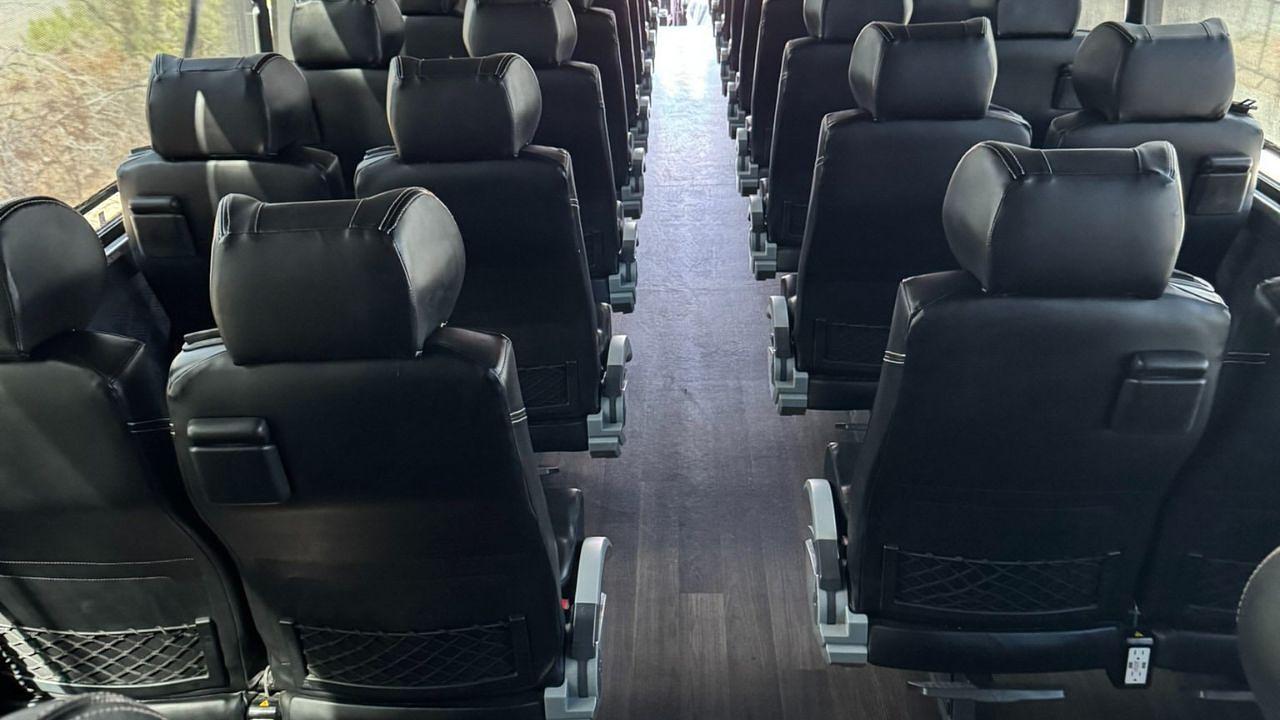
The 56 passenger coach bus is the standard US motorcoach configuration and the right starting point for almost every charter fleet. Understanding why that number is the standard, what you get inside one, and what it actually costs to buy and run changes every fleet decision that follows it.
If you’re planning a group trip and need to know what to expect on board, skip to the rental section near the end. If you’re buying, leasing, or building a fleet, the whole guide is worth your time. The questions operators ask most are the ones that tend to get the thinnest answers everywhere else.
Two audiences read articles like this. Group travel planners want to know what’s on the bus and what it costs to rent. Fleet operators want to know what to buy, what to pay, what breaks, and how to finance it without strangling their cash flow. The Bus Coach serves the operator side of this market and this guide is written from that perspective, with a rental section at the end for group planners.
Why 56 Passengers Is the Number That Matters
The 56-passenger motorcoach is the US standard for reasons that go well beyond history. It’s the capacity that handles the broadest range of group charter jobs without modification. School field trip? Yes. Corporate event? Yes. Sports team? Yes. Wedding party? Yes. A 56-seat coach can take all of them and still have the flexibility to cover for a competitor who’s sold out on a peak weekend.
For operators building a fleet, that flexibility is real money. It shows up in your booking acceptance rate every week and in your ability to grow by referring to overflow rather than losing it. A non-standard 34-passenger mid-size or a custom-configured 47-passenger layout at a good price cannot do this. The booking you decline because your only available vehicle is the wrong size for the group is a real cost that never appears on a balance sheet but accumulates over years.
The resale picture reinforces the same conclusion. A standard 56-passenger motorcoach has a large, active buyer pool. A non-standard configuration has a narrower audience. Buy what the market wants and the exit is straightforward. Buy what seemed like an interesting deal and you may carry the asset longer than planned at a lower price than expected.
The 56-passenger standard is not a range of 45 to 56. A full-size US motorcoach with a rear restroom seats 55 to 56 passengers. Without a restroom, the spec sheet may read 57 to 59. The restroom module reduces the working count by 2 to 4 seats. Since nearly every charter coach in the US includes a restroom as standard, 55 to 56 is the number to plan around.
What Comes Standard on a 56 Passenger Coach Bus
The amenities list on most charter booking pages looks the same because the basics genuinely are standard across most full-size coaches. What operators need to understand is the difference between what’s actually standard and what’s optional, and what the gaps between models actually mean for operations.
Category: Seating
Standard on Most 56-Pass Coaches: High-back reclining, 3-point seatbelts
Optional / Model-Specific: Leather, wider pitch, wing headrests
Category: Lavatory
Standard on Most 56-Pass Coaches: Rear restroom module (removes 2–4 seats)
Optional / Model-Specific: Flushing vs non-flushing, auxiliary holding tank
Category: Climate
Standard on Most 56-Pass Coaches: Full HVAC, individual overhead vents
Optional / Model-Specific: Dual-zone, enhanced airflow systems
Category: Entertainment
Standard on Most 56-Pass Coaches: DVD monitors, flat screens, PA system
Optional / Model-Specific: Individual screens, HDMI, streaming ports
Category: Connectivity
Standard on Most 56-Pass Coaches: 110V outlets throughout cabin
Optional / Model-Specific: Wi-Fi (select models), USB-A/C per seat
Category: Storage
Standard on Most 56-Pass Coaches: Undercarriage luggage bays, overhead racks
Optional / Model-Specific: Enlarged bays (35%+ on newer models)
Category: Safety
Standard on Most 56-Pass Coaches: Bendix ESP, ABS, ESC, safety glass
Optional / Model-Specific: Tire pressure monitoring, cameras
The connectivity row is where the market has split most noticeably in the last decade. Coaches built from 2018 onward often include Wi-Fi and USB charging as standard or near-standard. Older units may have neither. If your client base includes corporate groups, younger travellers, or anyone who books based on connectivity amenities, this is worth verifying before you purchase a pre-owned unit or promise it to a client from a fleet listing.
Flushing vs Non-Flushing Lavatory: Why It Matters More Than You Think
Nearly 100% of full-size US charter coaches include a rear restroom. What most spec sheets don’t clarify is whether that restroom uses a flushing mechanism or a simple holding tank system, and whether the coach has an auxiliary holding tank for extended operations. For day charters and single-day group trips, this distinction is minor. For multi-day tours, it changes how you schedule service stops and whether your tour director likes you.
Brand: Van Hool
Lavatory Type (Standard): Flushing
Flushing Available?: Yes, standard
Auxiliary Tank Option?: Yes on some models
Brand: Setra
Lavatory Type (Standard): Flushing
Flushing Available?: Yes, standard
Auxiliary Tank Option?: Yes
Brand: TEMSA
Lavatory Type (Standard): Flushing
Flushing Available?: Yes, standard
Auxiliary Tank Option?: Yes
Brand: Prevost
Lavatory Type (Standard): Non-flushing (holding tank)
Flushing Available?: Yes, as option
Auxiliary Tank Option?: Yes, available
Brand: MCI
Lavatory Type (Standard): Non-flushing (holding tank)
Flushing Available?: Yes, as option
Auxiliary Tank Option?: Yes, available
Van Hool, Setra, and TEMSA offer flushing lavatories as standard or near-standard. Prevost and MCI typically run non-flushing holding tank systems, with flushing available as a factory option. Neither system is a dealbreaker. The non-flushing system requires emptying the holding tank at regular service intervals and limits how long you can run between stops on longer routes. The flushing system adds plumbing complexity but handles extended operation more cleanly.
The auxiliary holding tank is the detail most operators overlook until the first multi-day tour where the standard tank capacity runs out before the next service facility. An auxiliary tank allows coaches to complete multi-day runs without having to service the lavatory mid-trip, which your passengers and your tour operator clients will notice. If you’re buying a pre-owned unit that will run multi-day tours, ask specifically whether an auxiliary tank is fitted.
Top US Coach Models That Seat 56 Passengers
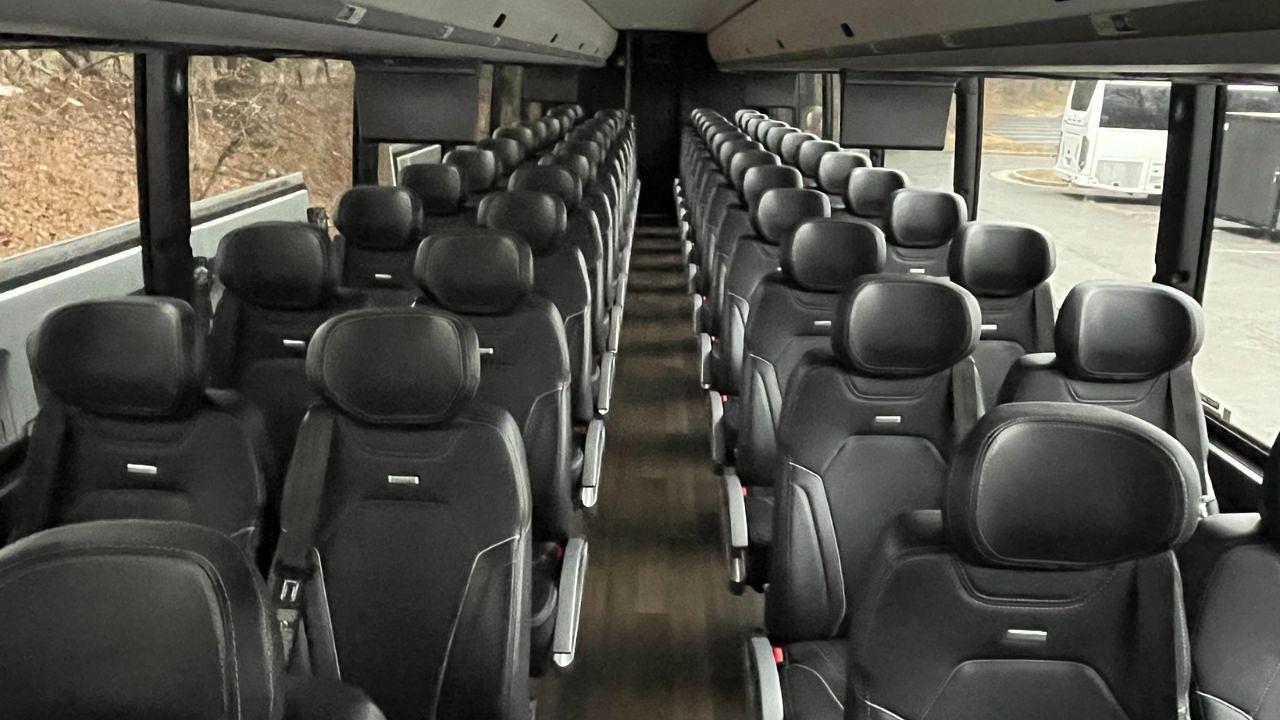
The 56-passenger configuration spans multiple platforms and the experience inside each one is not identical. Here are the five main US market models at this capacity and what distinguishes each.
Model: Prevost H3-45
Standard Cap.: 56 passengers
With Restroom: 54 to 55
Length: 45 ft
Notes: Strongest US resale, premium charter standard
Model: MCI J4500
Standard Cap.: 56 passengers
With Restroom: 54 to 55
Length: 45 ft
Notes: Line-run workhorse, widest service network
Model: Van Hool CX45
Standard Cap.: 57 passengers
With Restroom: 55 to 56
Length: 45 ft
Notes: Slightly higher cap, Belgian build quality
Model: TEMSA TS45
Standard Cap.: 56 to 57
With Restroom: 55 to 56
Length: 45 ft
Notes: Growing US presence, strong standard amenities
Model: MCI D45 CRT LE
Standard Cap.: 55 passengers
With Restroom: 53 to 54
Length: 45 ft
Notes: ADA accessible, popular line-run config
The Prevost H3-45 and MCI J4500 are the dominant platforms in US charter operations. Prevost coaches are associated with premium tour operations and the H3-45 has the strongest and most liquid resale market of any US motorcoach model. MCI’s J4500 is the line-run and general charter workhorse, with service infrastructure across more of the country than any competing platform.
Van Hool’s CX45 sits at slightly above standard capacity and has a strong presence in premium charter and tour. TEMSA’s TS45 has grown substantially in US market share and its standard amenity package is competitive with the established platforms on features like flushing lavatories and USB charging. The Bus Coach’s coach inventory includes pre-owned units across these platforms with inspection reports and service histories on all pre-owned stock.
Pre-Owned Price Guide: What to Pay by Model Year
The pre-owned coach market has a wide price range and the gap between a good deal and an expensive mistake is not always visible on the surface. Here’s a vintage-by-vintage price reference for the US market in 2026. These are typical ranges based on active market listings at standard mileage. Condition, service history, and model all affect price within each range.
Model Year: 2022 to 2023
Typical Market Range (Pre-Owned): $300k to $450k
Condition Context: Like-new, low miles, recent warr.
Caution: Near-new depreciation, verify hours
Model Year: 2019 to 2021
Typical Market Range (Pre-Owned): $200k to $320k
Condition Context: Best value zone, post-depreciation
Caution: Check HVAC and drivetrain service records
Model Year: 2016 to 2018
Typical Market Range (Pre-Owned): $130k to $210k
Condition Context: Mid-life, known maintenance needs
Caution: Budget for HVAC and suspension work
Model Year: 2013 to 2015
Typical Market Range (Pre-Owned): $80k to $140k
Condition Context: Older fleet, higher mileage likely
Caution: Full drivetrain inspection essential
Model Year: Below $85k
Typical Market Range (Pre-Owned): High risk
Condition Context: Often conceals major issues
Caution: Avoid without independent inspection
The sub-$85,000 caution row deserves its own note. Coaches in this price range are not automatically bad vehicles. But a 56-passenger motorcoach listed well below market for its vintage has either an explanation or a problem. If the seller can’t explain the price gap with documentation, the explanation is probably the problem. Insist on a third-party inspection before any purchase below market rate for the year.
The 2019 to 2021 range is widely regarded as the best value zone in the pre-owned market. These coaches have absorbed the steepest depreciation from their original sale price, are still relatively recent in design and technology, and have predictable remaining service life on major components. If you’re buying your first coach or adding a standard unit to an existing fleet, start your search here.
Most Common Issues on 56-Passenger Coaches and How to Spot Them
The most trusted fleet purchases in this industry are made by operators who know what breaks before they buy, not after. Analysis of buyer reviews and fleet operator feedback consistently identifies the same failure categories on full-size motorcoaches. None of these are reasons to avoid the category. They’re reasons to inspect carefully and price the risk into your offer.
Component: HVAC system
Failure Rate / Risk: Most reported issue on older units
Warning Signs to Inspect: Uneven cabin temp, unusual noise, slow cool
Typical Repair Cost: $5k to $25k depending on scope
Component: Entry steps
Failure Rate / Risk: Premature wear common
Warning Signs to Inspect: Sticking, grinding, misalignment on close
Typical Repair Cost: $1k to $5k
Component: Transmission
Failure Rate / Risk: Expensive when neglected
Warning Signs to Inspect: Rough shifts, delayed engagement
Typical Repair Cost: $15k to $35k overhaul
Component: Suspension
Failure Rate / Risk: Higher mileage units most at risk
Warning Signs to Inspect: Uneven ride, clunking on rough road
Typical Repair Cost: $3k to $12k
Component: USB / power ports
Failure Rate / Risk: Fail with age and use
Warning Signs to Inspect: Test every outlet before purchase
Typical Repair Cost: $500 to $3k system-wide
Component: Windshield seals
Failure Rate / Risk: Water intrusion on older models
Warning Signs to Inspect: Check corners and roof edge for moisture
Typical Repair Cost: $2k to $8k
Component: Lavatory pump
Failure Rate / Risk: Fails if not serviced regularly
Warning Signs to Inspect: Odour, non-flush function, sensor errors
Typical Repair Cost: $500 to $3k
HVAC failure is the most commonly reported issue across all coach vintages and it is the one that causes the most client-facing problems because it shows up in summer, on fully booked trips, in states where the air conditioning is not optional. Before purchasing any pre-owned coach, run the HVAC system fully through every zone, check the evaporator and condenser for deferred maintenance, and ask specifically about the service history on the climate system. A deferred HVAC service that costs $800 to maintain can turn into a $15,000 repair if it’s ignored through another operating season.
The transmission warning is the one that separates operators who regret their purchase from those who don’t. A $15,000 to $35,000 transmission overhaul on a coach bought at a price that seemed attractive can wipe out the acquisition savings in a single repair event. Operators who skip extended warranties on pre-owned coaches and then face major drivetrain repairs consistently report that the warranty cost would have been the better choice. If you’re buying a pre-owned coach without a dealer warranty, budget explicitly for a major drivetrain event in years 1 to 3 and price that into your offer.
New vs Used: The Honest Financial Comparison
The case for new coaches is real for established operators with contract volume that justifies the investment. The case for pre-owned is equally real for operators at every other stage of fleet development. The table below gives the honest comparison, including the financing rate context that most guides omit.
Factor: Acquisition cost
New Coach: $500k to $600k+
Pre-Owned Coach: $80k to $320k depending on year
Factor: Loan APR (typical)
New Coach: 5.5% to 7.5% for qualified buyers
Pre-Owned Coach: 5.5% to 7.5% same rate range
Factor: Debt service/yr
New Coach: $40k to $65k
Pre-Owned Coach: $15k to $35k
Factor: Depreciation
New Coach: Steepest in years 1 to 5
Pre-Owned Coach: Prior owner absorbed peak curve
Factor: Warranty
New Coach: Full manufacturer coverage
Pre-Owned Coach: Varies, ask dealer for any warranty terms
Factor: Extended warranty
New Coach: Often included or discounted
Pre-Owned Coach: Recommended: $15k+ transmission cost without
Factor: Best for
New Coach: Established op, contract-backed
Pre-Owned Coach: New operators, fleet growth, budget work
The loan APR range of 5.5% to 7.5% for qualified buyers applies to both new and pre-owned coach purchases at most commercial lenders familiar with the bus industry. The difference in monthly payment between a $550,000 new coach and a $175,000 pre-owned unit at the same rate is dramatic. On a five-year loan at 6.5%, the new coach payment approaches $10,800 per month. The pre-owned unit payment is closer to $3,400. That $7,400 monthly difference is real operating cash flow every month, whether the bus is full or sitting in the depot.
The extended warranty recommendation is not an upsell. On a pre-owned coach without warranty coverage, a single transmission overhaul at $20,000 costs more than most extended warranty programmes would have cost in total. For operators buying pre-owned units in the $80,000 to $180,000 range, ask your dealer whether any warranty terms are available and factor the cost into the purchase decision rather than the operating budget.
Used Motorcoach vs School Bus for Budget Operations
There’s a real and active market for budget-tier bus operations. Line-haul routes, ski trips, school athletics, and similar jobs don’t always justify the cost of a premium motorcoach experience. The question is whether a school bus or activity bus is actually cheaper all-in than a well-priced used motorcoach at comparable acquisition cost.
Factor: Passenger comfort
Used Motorcoach ($100k to $200k): High-back seats, restroom, AC
Activity School Bus ($30k to $80k): Basic bench seating, no restroom
Yellow School Bus ($20k to $50k): Bench seating, no restroom
Factor: Brand image
Used Motorcoach ($100k to $200k): Professional motorcoach appearance
Activity School Bus ($30k to $80k): Institutional, not charter-grade
Yellow School Bus ($20k to $50k): School/youth appearance
Factor: Fuel cost
Used Motorcoach ($100k to $200k): Higher (heavier diesel vehicle)
Activity School Bus ($30k to $80k): Moderate
Yellow School Bus ($20k to $50k): Lower
Factor: Maintenance cost
Used Motorcoach ($100k to $200k): Moderate (age-dependent)
Activity School Bus ($30k to $80k): Lower, simpler systems
Yellow School Bus ($20k to $50k): Lower, very simple systems
Factor: Resale in fleet
Used Motorcoach ($100k to $200k): Sellable to charter operators
Activity School Bus ($30k to $80k): Limited charter resale
Yellow School Bus ($20k to $50k): Very limited charter resale
Factor: Client perception
Used Motorcoach ($100k to $200k): Premium, trusted for all trip types
Activity School Bus ($30k to $80k): Budget, appropriate for some routes
Yellow School Bus ($20k to $50k): Budget, signals school/athletic only
Factor: Verdict
Used Motorcoach ($100k to $200k): Best for all trip types, premium and budget
Activity School Bus ($30k to $80k): Budget routes only, no premium charter
Yellow School Bus ($20k to $50k): Athletics, youth, lowest-cost ops only
The verdict column tells the story. A used motorcoach at $100,000 to $200,000 delivers every measurable advantage over a school bus except one: acquisition cost. And even that gap closes when you compare a quality used coach at the lower end of the pre-owned market against a well-equipped activity school bus. The operating cost advantage of a school bus is real on fuel and maintenance. But if the work involves any adult clients comparing your vehicle to competitors, a school bus costs you in client perception every time the bus pulls up.
The most common operator mistake in this category is buying school buses for budget work and then discovering that the resale value within a charter fleet context is minimal. A coach that has aged out of premium service can still be sold to another charter operator for budget work. A school bus that has aged out of service has a much narrower exit.
Total Cost of Ownership: What Running a 56-Passenger Coach Actually Costs
The purchase price is the number everyone focuses on. The total cost of ownership is the number that determines whether the vehicle actually earns its keep over the time you own it.
Cost Category: Fuel (100k mi/yr)
New Coach (Annual Est.): $35k to $55k
Pre-Owned Coach (Annual Est.): $35k to $55k
Notes: Similar burn regardless of age
Cost Category: Insurance
New Coach (Annual Est.): $8k to $20k
Pre-Owned Coach (Annual Est.): $6k to $16k
Notes: Lower on older units typically
Cost Category: Routine maintenance
New Coach (Annual Est.): $8k to $15k
Pre-Owned Coach (Annual Est.): $10k to $20k
Notes: Older units may need more attention
Cost Category: Financing/yr
New Coach (Annual Est.): $40k to $65k
Pre-Owned Coach (Annual Est.): $15k to $35k
Notes: Largest swing between new and used
Cost Category: Total annual est.
New Coach (Annual Est.): $91k to $155k
Pre-Owned Coach (Annual Est.): $66k to $126k
Notes: Used coach significantly lower all-in
Fuel is the equaliser in this table. A new coach and a 12-year-old coach burn roughly the same diesel on the same route. The financing row is the biggest swing factor. A new coach financed over five years at 6.5% adds approximately $130,000 in total interest cost. A pre-owned unit at $175,000 financed at the same rate adds approximately $30,000 to $35,000 in total interest. That difference funds years of routine maintenance.
56 Passenger Coach Bus Rental: What Groups Need to Know
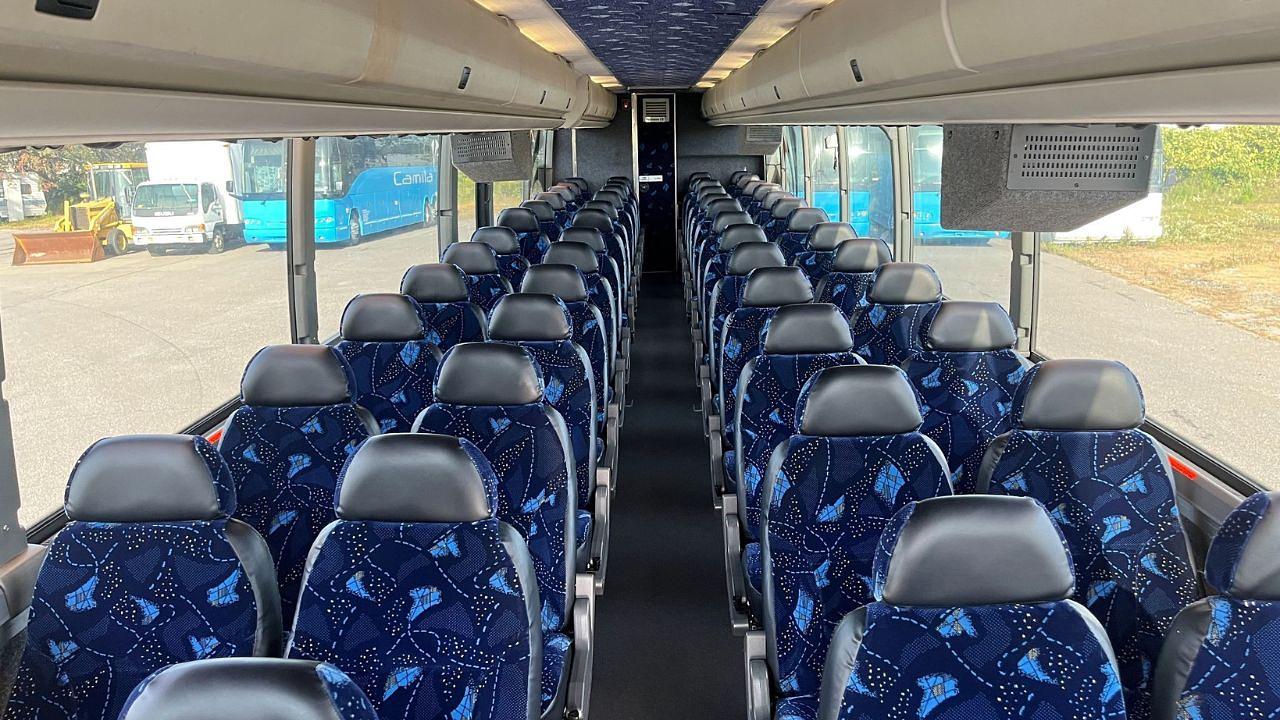
A 56 passenger coach bus rental is the most common way non-fleet buyers access this capacity. Rates vary considerably by region, season, and trip profile. A single-day regional charter typically runs $800 to $2,000 depending on the market and operator. Multi-day and longer-distance trips are typically priced at $4 to $8 per mile plus driver expenses for overnight travel.
From a safety and compliance standpoint: every legitimate US charter operator maintains an active FMCSA authority and must carry minimum $5 million in liability coverage per FMCSA requirements for commercial passenger carriers. Reputable operators carry $10 million or more. You can verify any carrier’s safety rating and insurance compliance at the FMCSA Safety Measurement System (SMS) database at safer.fmcsa.dot.gov before you book. A Satisfactory or Conditional DOT safety rating is what you’re looking for.
For corporate events, school trips, or any charter requiring proof of insurance, ask for the certificate of insurance before finalising the contract. This is standard practice and any established operator provides it on request without delay.
• Book early. Peak season (May through August) and major holiday weekends fill 6 to 8 weeks out for large coaches.
• Ask for the specific vehicle. Year, make, and model. A 2021 Van Hool and a 2010 MCI are both ‘56-passenger coaches’ but are different experiences.
• Confirm the lavatory type. For trips over 3 hours, flushing vs non-flushing matters for passenger comfort.
• Verify Wi-Fi. Not standard on all units. Confirm before booking if your group requires it.
• Request the certificate of insurance. Standard for corporate and school bookings, and any operator worth booking provides it immediately.
Pre-Purchase Inspection Checklist
These are the inspection areas that most often separate a good pre-owned purchase from an expensive one. Work through them in order from most expensive to diagnose incorrectly to least.
• Service records. Documented maintenance history is the single most important differentiator. No records means the maintenance may not have happened.
• HVAC system. Run every zone fully. Check evaporator and condenser. This is the most reported failure category on all coach vintages.
• Transmission. Test all gears, check for rough shifts or hesitation. Ask for transmission service history specifically. A $15k to $35k overhaul starts here.
• Engine. Check oil analysis history if available, ask about any major service events, verify remaining hours on overhaul cycle
• Lavatory system. Test pump function, check holding tank and seals, confirm whether flushing and auxiliary tank are present.
• Electrical. Test every outlet, monitor, USB port, and Wi-Fi system throughout the cabin. Failure here is cheap to fix before prchase, expensive after.
• Entry steps. Common wear item, check for sticking, grinding, or misalignment on every cycle.
• Body structure. Inspect wheel arches, lower panels, and undercarriage for previous collision damage or corrosion.
• DOT documentation. Verify current compliance status, last inspection date, and that capacity documentation matches the actual configuration.
The 56 passenger coach bus is the backbone of American motorcoach operations because it fits nearly every job, holds its value, and gives fleet operators the flexibility to grow without being backed into a corner by a non-standard asset. The Bus Coach’s coach inventory includes 56-passenger coaches across new and pre-owned options with condition documentation and service history on all pre-owned listings. The Bus Coach is worth a conversation before you commit to any purchase.
Here’s the question every operator eventually asks themselves: if every coach in your fleet was a standard 56-passenger unit and you ran them until they were 12 years old, would your business be in better or worse shape than it is today? Most people already know the answer.
FAQs
1.What does a 56-passenger coach bus actually seat with a restroom installed?
54 to 56 passengers in most configurations. The rear restroom module physically occupies the space of 2 to 4 seats. Spec sheet maximums without a restroom may read 57 to 59. With a standard rear lavatory, the working booking capacity is 54 to 56 on most full-size US motorcoaches.
2.What’s the difference between a flushing and non-flushing lavatory on a coach?
A flushing lavatory uses a sealed flush mechanism and is cleaner for extended use. Non-flushing systems use a holding tank that requires periodic emptying. Van Hool, Setra, and TEMSA offer flushing as standard. Prevost and MCI typically use non-flushing systems with flushing as an option. For multi-day tours, an auxiliary holding tank allows extended operation without mid-trip lavatory servicing.
3.How much does a pre-owned 56-passenger coach cost?
2022 to 2023 models: $300,000 to $450,000. 2019 to 2021 models: $200,000 to $320,000. 2016 to 2018 models: $130,000 to $210,000. 2013 to 2015 models: $80,000 to $140,000. Listings below $85,000 should be treated with caution and inspected independently before purchase as they frequently conceal major drivetrain or structural issues.
4.What is the typical financing rate for a coach bus purchase?
Dealer loans for qualified buyers typically run 5.5% to 7.5% APR on both new and pre-owned coaches. The rate applies similarly across vehicle age categories. The significant difference is the loan principal: a new coach at $550,000 and a pre-owned unit at $175,000 at the same rate produce dramatically different monthly payments and total interest costs over the loan term.
5.What are the most common issues on pre-owned 56-passenger coaches?
HVAC system failures are the most frequently reported issue across all coach vintages, particularly during summer operating months. Transmission wear on units without documented service history is the highest-cost failure event at $15,000 to $35,000 per overhaul. Entry step wear and USB/power port failures are common but inexpensive. A thorough pre-purchase inspection and insistence on service documentation reduce the risk significantly.
6.Should I buy new or used for my first 56-passenger coach?
For most new operators, a well-maintained pre-owned 56-passenger coach in the 2019 to 2021 model year range is the better first purchase. Lower acquisition cost, more manageable debt service, and an established vehicle platform with a known service record all favour the pre-owned route. Save new coach purchases for operations with the contract volume and cash flow to support the higher payment.
7.Is a used motorcoach better than a school bus for budget operations?
Usually yes, when comparing comparable acquisition costs. A used motorcoach delivers higher passenger comfort, better brand positioning for adult group charters, and a more liquid resale market within the charter industry. School buses have lower fuel and maintenance costs but limited resale value in a charter context and client perception issues on adult group work. At comparable prices, the used motorcoach is typically the better fleet investment.
8.What should I verify before renting a 56-passenger coach?
Verify the FMCSA safety rating of the operator at safer.fmcsa.dot.gov. Confirm the specific vehicle year and model. Ask about the lavatory type for trips over 3 hours. Confirm Wi-Fi availability if required. Request a certificate of insurance for corporate or school bookings. Get the cancellation terms in writing before paying a deposit.
9.What is the total annual cost to operate a 56-passenger coach?
Approximately $66,000 to $155,000 per year depending on vehicle age, financing, annual mileage, and insurance profile. Fuel accounts for $35,000 to $55,000 at typical mileage. Financing is the largest variable. A new coach adds $40,000 to $65,000 in annual debt service while a pre-owned coach financed at lower acquisition cost adds $15,000 to $35,000. Routine maintenance runs $8,000 to $20,000 annually depending on vehicle age.