
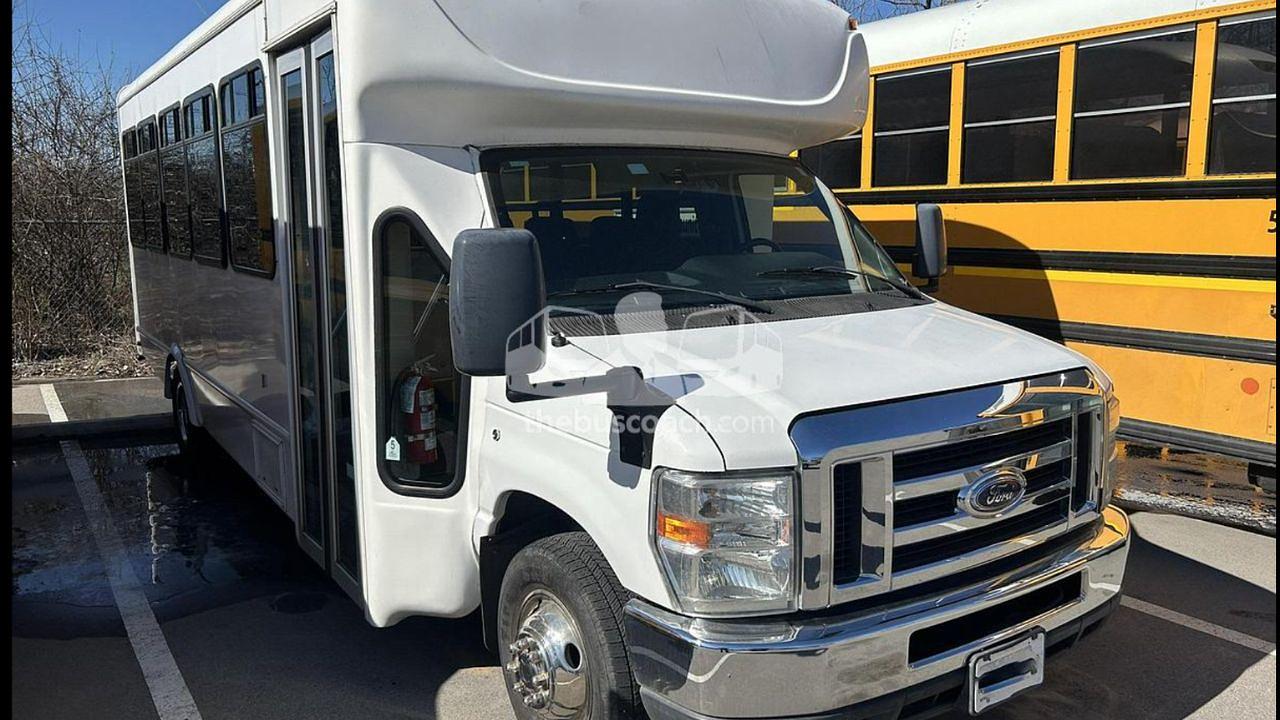
Think of a cutaway bus like this: take a regular van, the kind with a driver's seat and an engine up front, like a Ford E-450. Now cut off the back part of that van. Then attach a bus body onto it instead, with seats, windows, and room for passengers. So, you are using a van's front half, and adding a bus's back half.
People like this because it is:
Cheaper than building a whole coach from scratch
Easier to fix, since it's mostly regular van parts under the hood
Good middle option, bigger than a van, smaller and less expensive than a full motorcoach
We talk to operators at The Bus Coach about this exact choice. Cutaway bus, full-size coach, or something in between, take your pick. It is rarely obvious on paper.. But once you know what these vehicles are actually built for, the choice gets a lot easier.
What Makes This Vehicle Different
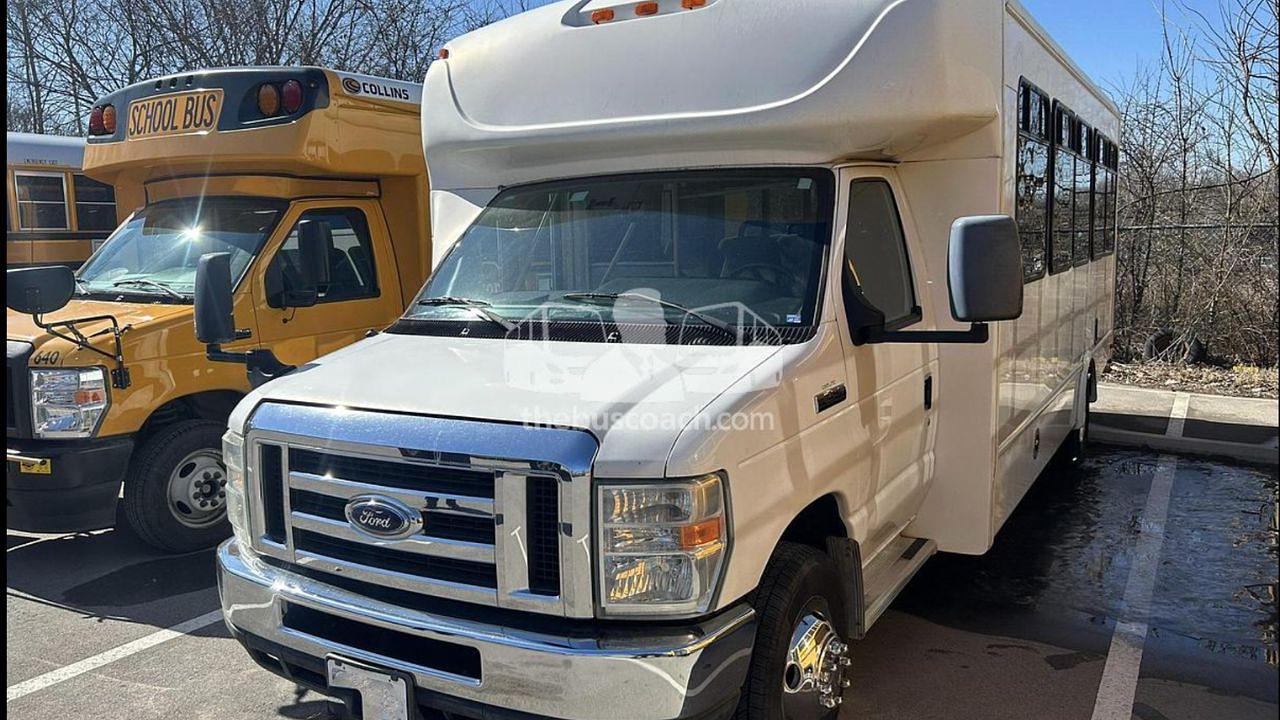
"Cutaway" is a funny word if you think about it. It literally means what it sounds like. Builders take a van cab, a Ford E-450 or Chevy Express, and cut away everything behind the driver's seat. Then a second-stage manufacturer bolts a bus body onto that bare frame. That's why these buses feel easier to maneuver than a full-size coach.
Here is the upside of building it this way. Costs stay down, since you are not paying for a purpose-built coach chassis. And parts? Easy to find. You are riding on a platform thousands of fleets already run every single day.
Cutaway Bus Seating Capacity
Seating shifts a lot depending on body length, so let's break it down.
Body Length: 20–22 feet
Typical Seating: 12–16 passengers
Common Use Case: Airport and hotel shuttles
Body Length: 24–28 feet
Typical Seating: 18–25 passengers
Common Use Case: Senior living, paratransit
Body Length: 30–35 feet
Typical Seating: 25–45 passengers
Common Use Case: School and activity transport
A shuttle in the 20 to 25 range hits the sweet spot for most smaller operators. Big enough for group bookings. Small enough to actually park where a full coach can't.
Chassis Options: Ford, GM, or Freightliner
Most of these buses ride on a Ford, GM, or Freightliner chassis, and mechanics will happily argue about all three over coffee. Ford's E-450 is widely known for excellent parts availability. Most commercial repair shops are already familiar with it, no learning curve involved. Some operators prefer GM chassis for certain routes, while others stick with Ford because of service availability. Freightliner chassis are often used for larger commercial shuttle applications.
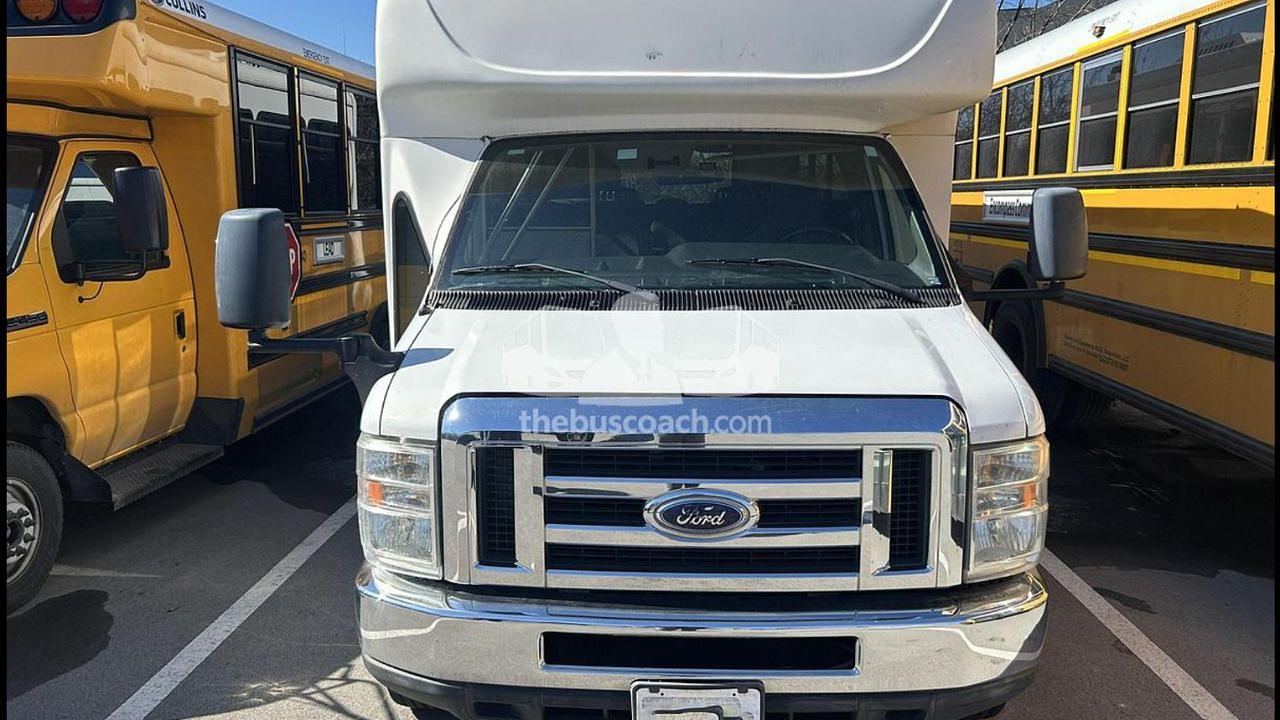
Want a real-world example? Take a look at this 2014 Ford E-450, listed out of Nashville. It seats 25 passengers, and it is a pretty solid picture of what a well-kept, higher-mileage cutaway bus for sale looks like once it is actually on the market.
License Requirements and Practical Considerations
Does driving one of these need a CDL? That's the question we get asked more than almost anything else. It depends on your state, and it depends on passenger capacity too, so don't just take our word for it. Confirm with your local DMV or DOT office before you assign a driver. Plenty of smaller units fall under non-CDL weight limits, which honestly makes staffing a whole lot easier.
That flexibility matters more than people expect going in. Finding and training a driver for this class of vehicle beats doing it for a full coach, especially when good drivers are hard to come by.
Cost, Maintenance, and the Budget Question
Should every operator run one? Not really, and we will say that plainly. You won't get the comfort or brand image of a full coach here. What you get instead is a lower cost per mile, plus simpler maintenance.
Think ski trips, school athletics, short shuttle runs. These often fit a smaller shuttle a lot better than a $500,000 motorcoach would. Save the bigger vehicles for jobs where comfort actually wins you repeat business. Plenty of fleet owners run mixed fleets for exactly this reason, and it works.
What to Check Before You Buy
Buying a used bus takes a bit more digging than buying a new one. These vehicles rack up miles fast on daily routes.
- Mileage relative to age and route type
- Wheelchair lift, if your routes actually need one
- Service records for the chassis, not just the bus body
- Seating that actually matches your typical group size
The 2014 Ford E-450 gives you a real feel for what is out there. 196,579 miles. 25-passenger seating. A pretty typical profile for a vehicle that's spent years earning its keep in active shuttle service.
Is This the Right Fit for Your Fleet?
Shorter routes. Tighter budgets. Growing service lines that don't justify a full coach just yet. This type of vehicle checks all three boxes. It won't replace your premium charter buses, and it's not trying to. It's the workhorse for your everyday, high-frequency routes.
First vehicle or fifteenth, doesn't matter, the The Bus Coach team has helped enough fleets find the right mix to know what actually works. Look at your route lengths and group sizes first, then go browse inventory like the Nashville E-450 once you're ready to move.
Frequently Asked Questions
How many passengers fit on one of these?
Anywhere from 12 to 45, honestly. Depends on body length and manufacturer.
Do you need a CDL to drive it?
Often not. Plenty fall under non-CDL weight limits, but check your state's rules first.
How's it different from a minibus?
A cutaway has a van chassis plus a separate bus body bolted on. A minibus is basically just a converted van, nothing added.
Is a high-mileage used unit still worth buying?
Usually, yes, as long as the service records check out. These chassis are built to handle years of daily use.